













Australia, New Zealand & Pacific Islands
Copyright © 2016 Toshiba Corporation. All Rights Reserved.

In an always‑on digital world, print gives students focus, access and a sense of ownership over their learning.
Classrooms are richer than ever with devices and digital platforms. That’s a good thing right. But speak with teachers across primary and secondary schools and you’ll hear a quieter truth: printed materials still do a job that screens can’t always match.
 Think of the Year 4 student tracing their finger along a phonics worksheet, sounding out blends. Or the Year 10 student annotating a science booklet, circling key terms and scribbling questions in the margins. These are tactile moments—the kind that lodge learning in memory and bring calm to busy minds.
Focus, memory, and the power of a page
Printed pages reduce digital distractions. There are no pop‑ups, no tabs, no notifications—just the task at hand. For teachers who want to build sustained attention and deep comprehension, paper can be a powerful ally. It also provides a natural structure for learning sequences: a booklet for each unit, a planner that lives in a school bag, a wall chart that anchors routines.
Equity and access that’s reliable
Print levels the playing field. Not every student has consistent access to a device, connectivity, or a quiet place to learn at home. A printed booklet, visual timetable, or parent note ensures the message lands and the learning can continue—online or offline.
Print + digital = better together
This isn’t about choosing sides. The real magic happens when print and digital complement each other. Teachers might introduce a concept digitally, then consolidate it with a printed worksheet, reflection prompt, or graphic organiser that students can annotate freely.
How Toshiba supports “right‑sized” printing in schools
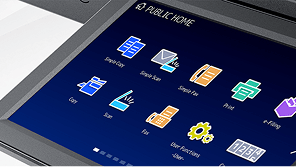
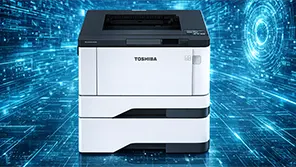
Toshiba’s education‑ready MFDs (multifunction devices) make it easy to print smartly and sustainably:
Example
Preparing for NAPLAN, a Stage 3 team created a series of short practice booklets. Using duplex black‑and‑white on 80gsm stock and a “2‑up” layout, they reduced paper by 40% while keeping materials clear, consistent, and calming for students. Teachers reported better engagement and fewer off‑task behaviours during practice sessions.
Interested in right‑sizing print for your school? Contact a Toshiba Education Specialist.