













Australia, New Zealand & Pacific Islands
Copyright © 2016 Toshiba Corporation. All Rights Reserved.

Important: This article contains general information only and is not tax, accounting or financial advice. Depreciation outcomes depend on your business circumstances and current ATO rules. Always consult your accountant or registered tax agent and refer to ato.gov.au before making financial decisions.
Current as at July 2026 — The proposed permanent $20,000 instant asset write-off from 1 July 2026 remains before Parliament and is not yet law. Check the latest status via the ATO before relying on this threshold.
A business-grade multifunction printer (MFP) is a depreciating asset for tax purposes. How you claim it depends primarily on your turnover and the purchase price of the device.
Many Toshiba multifunction printer configurations fall below the $20,000 threshold, although high-volume or heavily optioned models may exceed it.
The prime cost method spreads deductions evenly over the effective life of the asset. If an MFP has an effective life of five years, the deduction is generally around 20% of the asset's cost each year.
The diminishing value method provides larger deductions in the earlier years and smaller deductions later. This approach may benefit businesses seeking greater short-term cash-flow relief.
The ATO publishes effective life determinations for asset classes and updates them periodically. Office copiers and multifunction printers have historically been assigned an effective life of around five years. Always confirm the current determination for your specific asset.
A business with turnover under $10 million purchases an MFP for $7,000 and first uses it during the 2025–26 financial year. Under the instant asset write-off rules applicable for that year, the business may be able to deduct the full $7,000 immediately.
If the same device costs $24,000, it exceeds the threshold and would generally be added to the small-business depreciation pool. The first-year deduction would typically be 15%, followed by 30% of the remaining pool balance in subsequent years.
Illustration only. Actual deductions depend on eligibility, timing and current legislation.
Devices installed and ready for use by 30 June 2026 may qualify under the legislated 2025–26 instant asset write-off provisions.
For purchases from 1 July 2026, businesses should confirm the status of the proposed permanent $20,000 instant asset write-off before relying on it for purchasing decisions.
If timing materially affects your tax outcome, discuss the planned purchase with your accountant before committing.
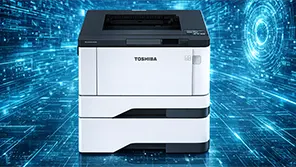
Toshiba's popular business MFPs, including the e-STUDIO2525AC, e-STUDIO3025AC, e-STUDIO3525AC and e-STUDIO4525AC, are widely deployed across Australian workplaces.
Depending on configuration, many models fall below the $20,000 threshold for outright purchase, although higher-volume and optioned systems may exceed it.
Businesses may choose between purchasing, leasing or managed print agreements based on operational, tax and cash-flow requirements.
Eligible small businesses may generally claim the full cost under the instant asset write-off, provided the asset meets the applicable threshold and installation requirements for that income year.
It will generally be allocated to the simplified depreciation pool rather than being immediately deducted.
Usually yes. Depending on the finance structure, lease payments may be claimed as operating expenses, while purchased assets are typically capitalised and depreciated over time.
Historically, office multifunction printers have commonly been assigned an effective life of around five years, although businesses should always verify the current determination applicable to their asset.
General Information Only
Toshiba (Australia) Pty Limited does not provide tax, accounting or financial advice. Consult your accountant or registered tax agent and refer to the Australian Taxation Office for current rules and eligibility requirements.